


Press release
PFAS: What they are & how to avoid them

In the world we live in today, the alphabet soup of acronyms for both good and bad substances can make your brain feel like mush. But there's one that you've probably seen popping up more and more. And it's one worth remembering.
PFAS, or "Forever Chemicals" are a class of man-made chemicals that are widely used (as in, they've been found in everything from human blood to arctic snow), and nearly impossible to destroy.
PFAS 101: What You Need To Know
How (and why) did these substances come to be? PFAS, short for per- and poly-fluoroalkyl substances, were initially created for their stunning ability to resist water, oil, heat, and grease. Invented back in the 1940s by the makers of Teflon, they're found in items such as non-stick cookware, waterproof clothing, and food packaging. PFAS are persistent in the environment and are so resistant that it's still not known exactly how long it takes for them to fully break down.
Since their birth in the '40s, [https://www.ewg.org/what-are-pfas-chemicals] PFAS have been known under many different names. Teflon, BPA, BPB, PFOS, PFNA, the list goes on [https://www.atsdr.cdc.gov/pfas/docs/PFAS_FamilyTree_EnvHealthPro-508.pdf]. For consumers, this makes things unnecessarily confusing. Now, the more than 12,000 compounds that make up some type of "Forever Chemical" are known under the name of PFAS.
The Trouble With PFASMounting concern surrounding PFAS stems mainly from their impact on human health. These chemicals have been linked to many health issues, including reproductive problems like infertility and severe birth defects, liver damage, lowered immunity, and an increased risk of certain cancers. Even minimal amounts of PFAS can cause serious health effects. Because PFAS are virtually impossible to destroy, the fear of what may occur as a result of longstanding exposure to the chemicals is great.
Because PFAS are now present in nearly every human on Earth, studying their exact effects is difficult to understand. What we do know is that reducing exposure to these chemicals has never been more essential.
How To Avoid PFAS: 8 Tips
1. Avoid Non-Stick Cookware: Remember Teflon? It was the original PFAS. Since then, PFAS in cookware hasn't gone away, even though the particular compound that makes up Teflon itself is now banned. Instead, the forever chemicals in kitchenware have shape-shifted, rebranding themselves into new names. Because of this, it's difficult to trust most non-stick cookware options, even those that claim to be "PFOS-free." That's because PFOS is only one of thousands of types of PFAS chemicals.
Want a safe bet that saves you a headache? Fill your kitchen with reliable options that avoid labeling confusion. These includecast iron, carbon steel, and 100% ceramic cookware. These long-standing chef favorites are durable, chemical-free, and work like a charm.
Extra Tip: Think of your cookware just like you think of your food. Ask questions about what it's made from, how it's made, and if it's healthy/safe for you. Keep gathering information until you have the facts to make an informed decision!
2. Invest In A Water Filter: A recent study of tap water sources across the U.S. ended with a startling statistic: over 45% of tap water contains some type of PFAS.
The good news? New federal regulations will require testing and remediation to ensure the safety of our water. But, until then, consider taking matters into your own hands. Several water filters, both below countertop and pitcher options, are currently designed to successfully remove PFAS from water. However, not all filters are the same. Look for filters that are certified by a third-party source, like the National Sanitation Foundation or the Water Quality Association.
3. Choose Natural Cleaning Products: Planning on keeping your home extra clean in order to avoid PFAS? To make sure your efforts aren't in vain, take a close look at your cleaning products. Many conventional cleaners contain these chemicals, some in high amounts.
But, safe and super-effective cleaning solutions abound! We love Meliora products. They are made with simple ingredients like baking soda and coconut oil, and are always PFAS-free. Look for certifications like MADE SAFE to know that the products you choose are as clean as they look.
4. Stay Away From Packaged Food: PFAs can leach into food from packaging materials, such as microwave popcorn bags and fast food wrappers. Limit your consumption of processed and packaged foods, and opt for fresh, whole foods whenever possible.
Bonus Tip: When you head to the store, bring fabric bags to place bulk produce and dried goods in. You'll reduce your plastic use and make sure that your food items are only touching natural materials.
5. Be Wary Of Fish Sources: While fish is a great source of healthy protein, some types of fish are exceedingly high in PFAS. Sadly, many rivers and other bodies of water are highly polluted, and these pollutants carry on to the fish living nearby.
Freshwater fish are found to have very high levels of PFAS, and should be avoided in most areas. When purchasing fish from a new area, it's advised to research any advisories that may be in place for that source.
6. Purchase Clothing Made Of Natural Materials: PFAS are commonly found (in quite high levels) in clothing that has waterproof, water-resistant, or stain-resistant qualities. This means that things like workout clothes, rain layers, and even your everyday shirt likely contain these chemicals.
While many companies, such as Patagonia, have pledged to phase out all PFAS in the coming years, many safe alternatives already exist. And one of the ways to ensure clean clothing is by starting with natural materials. Look for items made from 100% organic cotton, hemp, and even bamboo. Just be sure and double-check that the item you purchase does not contain any added chemicals or treatments.
7. Read Your Personal Care Product Labels: Products like shampoo, soap, and beauty items are commonly made with Forever Chemicals. Your skin is your body's biggest organ, so take extra caution when purchasing skin and hair products.
Our favorite way to shop clean for personal care is by using a retailer that only stocks PFAS-free products. Credo Beauty is a fantastic source that carefully audits each product it carries.
8. Cook At Home: As more and more research comes out about PFAS, a clear link between diet and PFAS levels is developing. And, more than a particular type of food, these facts are talking about how people eat. One study found that people who eat at home the most also have the lowest levels of PFAS.When you eat at home, your food is less likely to have come in contact with grease-proof, PFAS-lined containers. And, you have more control over the cookware that's used to make it.
Bonus Tip: Work on turning your kitchen into a PFAS-free zone. After you switch to those safe pots and pans, make the switch to natural, 100% organic cooking and eating utensils.
article source: https://www.eatware.com/news/pfas-what-they-are-how-to-avoid-them/
Media Contact
Company Name: Kang Xin(Haimen)Environmental Technology Co., Ltd.
Email:Send Email [https://www.abnewswire.com/email_contact_us.php?pr=pfas-what-they-are-how-to-avoid-them]
Country: China
Website: https://www.eatware.com/
This release was published on openPR.
Permanent link to this press release:
Copy
Please set a link in the press area of your homepage to this press release on openPR. openPR disclaims liability for any content contained in this release.
You can edit or delete your press release PFAS: What they are & how to avoid them here
News-ID: 3451067 • Views: …
More Releases from ABNewswire
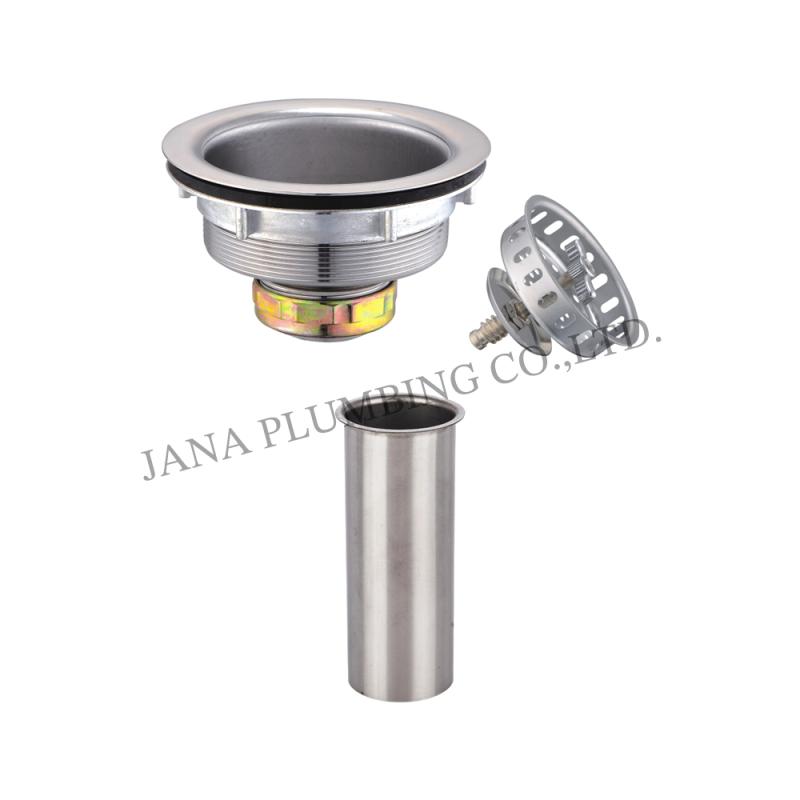
Wondering About The Spin & Lock Sink Strainer with Tailpiece's Magic?
Image: https://ecdn6-nc.globalso.com/upload/p/4026/image_other/2025-07/1-70.jpg
A Spin & Lock Sink Strainer [https://www.janaplumbing.com/sink-strainer-1/] with Tailpiece efficiently filters sink debris. This innovative plumbing component provides a secure, leak-proof drain pipe connection. It features a basket strainer for food particles. A unique spin and lock mechanism allows easy installation. The integrated tailpiece connects directly to the P-trap, ensuring reliable drainage.
Key Takeaways
* The Spin & Lock Sink Strainer with Tailpiece is easy to install. You just twist it…
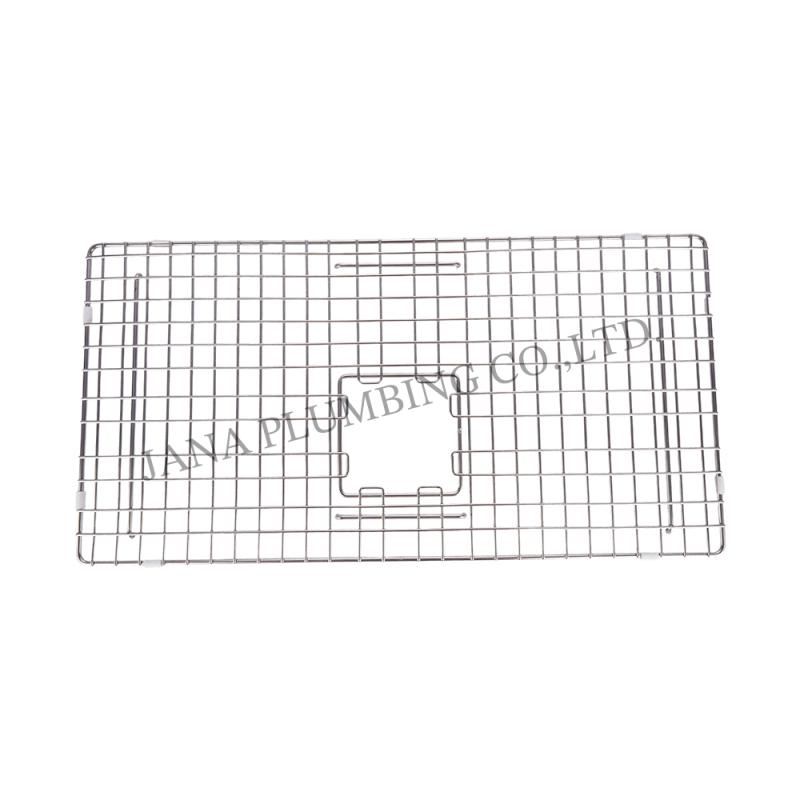
How to Maximize Drainage with a Sink Bottom Grid?
Image: https://ecdn6-nc.globalso.com/upload/p/4026/image_other/2025-07/1-84.jpg
Many kitchen owners struggle with hygiene and organization. Damp conditions often foster mold and bacterial growth. Unlock the full potential of your Sink Bottom Grid. Discover practical strategies to enhance organization, hygiene, and functionality. This transforms a simple accessory into an indispensable kitchen asset.
Key Takeaways
* A Sink Grid [https://www.janaplumbing.com/sink-grid/] improves kitchen hygiene. It helps water drain and air flow. This stops food from building up and items dry faster.
*…

Do Users Know about the Specifications and Applications of Sodium Isethionate CA …
Sodium Isethionate [https://www.unilongmaterial.com/sodium-isethionate-cas-1562-00-1-product/], with CAS 1562-00-1, is a water-soluble organic compound that has been widely applied in various industrial fields due to its excellent surface activity, mildness and stability. It originally originated from natural components and later became a key intermediate in modern chemical industry through the optimization of synthetic processes. Its core uses cover personal care, pharmaceuticals, industrial cleaning and emerging fields.
Personal care and cosmetics industry: The Foundation of…

Brooklyn Car Accident Lawyer Samantha Kucher, Esq. Clarifies Stacking Rules For …
Brooklyn, NY - Brooklyn car accident lawyer Samantha Kucher, Esq. of Kucher Law Group (https://www.rrklawgroup.com/is-stacking-insurance-policies-possible-after-a-new-york-passenger-car-accident/), addresses whether injured passengers can combine multiple insurance policies after a collision and explains how New York's framework governs recovery when the at-fault driver carries inadequate coverage. The guidance confirms that New York prohibits stacking and highlights how claimants can pursue compensation through high-limit Supplementary Uninsured or Underinsured Motorist coverage, commonly called SUM.
New York's position…
More Releases for PFAS
PFAS-Free Synthetic Turf Solutions | Eco-Friendly Artificial Grass and Non-PFAS …
This article delves into the key challenges and difficulties faced by the synthetic turf industry in achieving a "PFAS-free" transition, with a focus on innovative non-PFAS additive solutions designed to offer a sustainable path that balances high performance, safety, and environmental responsibility.
Challenges in Traditional Synthetic Turf Manufacturing | PFAS Risks Performance vs. Safety Dilemma
Traditional synthetic turf often relies on fluorinated polymers to achieve:
- Exceptional UV and weather durability
- Stain and…
Global PFAS-free Membranes Market Outlook Report 2025
Global Info Research's report is a detailed and comprehensive analysis for global PFAS-free Membranes market. Both quantitative and qualitative analyses are presented by manufacturers, by region & country, by Type and by Application. As the PFAS-free Membranes market is constantly changing, this report explores the competition, supply and demand trends, as well as key factors that contribute to its changing demands across many markets. Company profiles and product examples of…
PFAS-free Polymer Membranes Market Demand Analysis Report 2025
Global Info Research announces the release of the report "Global PFAS-free Polymer Membranes Market 2025 by Manufacturers, Regions, Type and Application, Forecast to 2031". This report provides a detailed overview of the PFAS-free Polymer Membranes market scenario, including a thorough analysis of the PFAS-free Polymer Membranes market size, sales quantity, average price, revenue, gross margin and market share.The PFAS-free Polymer Membranes report provides an in-depth analysis of the competitive landscape,…
PFAS Filtration Market: Advanced Solutions for Persistent Contaminants
𝐆𝐥𝐨𝐛𝐚𝐥 𝐌𝐚𝐫𝐤𝐞𝐭 𝐭𝐨 𝐑𝐞𝐚𝐜𝐡 𝐔𝐒𝐃 𝟑.𝟖𝟓 𝐁𝐢𝐥𝐥𝐢𝐨𝐧 𝐛𝐲 𝟐𝟎𝟑𝟑 𝐀𝐦𝐢𝐝𝐬𝐭 𝐑𝐢𝐬𝐢𝐧𝐠 𝐏𝐅𝐀𝐒 𝐂𝐨𝐧𝐜𝐞𝐫𝐧𝐬 𝐚𝐧𝐝 𝐑𝐞𝐠𝐮𝐥𝐚𝐭𝐨𝐫𝐲 𝐏𝐫𝐞𝐬𝐬𝐮𝐫𝐞𝐬
The PFAS filtration market is experiencing substantial expansion, driven by escalating concerns over per- and polyfluoroalkyl substances (PFAS) contamination in drinking water, industrial effluents, and consumer goods. Valued at USD 2,089.50 million in 2024, the market is projected to grow at a CAGR of 7.20%, reaching USD 3,855.56 million by 2033. This growth is fueled…
PFAS-free Polymer Processing Aids (PFAS-Free PPA Additives), a solution to the p …
In the plastic processing industry, die build-up is a common problem that can lead to surface defects in products, affecting product quality and production efficiency.
Die build-up refers to the accumulation of material at the outlet of the mold during plastic processing, forming deposits that are difficult to remove. This phenomenon usually occurs in injection molding, extrusion and other processes, especially in the processing of high viscosity and high melting point…
Scanunit helps ferry Aurora in first PFAS/PFOS conversion
Battery-powered Öresundslinjen ferry notches up an environmental first with turnkey conversion and decontamination of soon to be outlawed PFAS/PFOS fire-fighting foam to an environmentally friendly alternative.
Helsingborg, Sweden February 5: Maritime engineering specialist Scanunit has carried out what it believes is the world's first replacement and decontamination of a PFAS/PFOS1 foam firefighting system on a commercial vessel. Aurora, a 1992-built ferry operated by EQT-owned Öresundslinjen (a subsidiary of Molslinjen), was…

