


Press release
High-Tenacity Cellulosic Staple Fiber Market Outlook to 2036: Strategic Insights for R&D, Expansion, and Market Development

As the global textile and materials landscape shifts toward eco-conscious materials and high-performance solutions, demand for high-tenacity cellulosic staple fibers is expected to expand across apparel, technical textiles, industrial fabrics, and composites.
To access the complete data tables and in-depth insights, request a Discount On The Report here: https://www.factmr.com/connectus/sample?flag=S&rep_id=12753
Market Overview
High-tenacity cellulosic staple fibers are manufactured from cellulose that has been processed, spun, and drawn to achieve enhanced tensile strength and durability. Unlike standard viscose or rayon fibers, high-tenacity variants are designed to withstand greater mechanical stresses, making them suited to heavy-duty applications in workwear, conveyor belts, tire cords, geotextiles, and reinforced composites. Because they are plant-based and biodegradable, they align with sustainability goals that are gaining prominence across sectors.
This market benefits from long-term trends favoring eco-friendly materials, regulatory attention on microplastic reduction, and innovation in biobased fiber technologies.
Quick Market Snapshot (2025-2035)
High-Tenacity Cellulosic Staple Fiber Market Value (2026): USD 0.84 billion
High-Tenacity Cellulosic Staple Fiber Market Forecast Value (2036): USD 1.65 billion
High-Tenacity Cellulosic Staple Fiber Market Forecast CAGR: 7.0%
Leading Fiber Type in High-Tenacity Cellulosic Staple Fiber Market: High-Tenacity Viscose (38.0%)
Key Growth Regions in High-Tenacity Cellulosic Staple Fiber Market: China, Brazil, Europe
Key Players in High-Tenacity Cellulosic Staple Fiber Market: Lenzing, Birla Cellulose, Kelheim Fibres, Sateri, Tangshan Sanyou
Key Demand Drivers
1. Sustainability and Eco-Friendly Material Demand
Growing consumer preference for renewable and biodegradable fibers
Regulatory pressure to reduce reliance on synthetic, non-biodegradable materials
Corporate commitments to sustainable supply chains
High-tenacity cellulosic fibers support sustainability initiatives without compromising performance.
2. Growth of Technical and Industrial Textile Applications
Use in heavy-duty fabrics requiring strong, durable fibers
Industrial textiles for safety gear, conveyor belts, geotextiles
Replacement of synthetic high-tenacity fibers in select applications
Industrial demand is a major contributor to overall market growth.
3. Expansion of Performance and Functional Apparel
Sportswear and workwear requiring durability and comfort
Flame-resistant and protective clothing applications
Blends with high-performance synthetic fibers
High-tenacity cellulosic fibers provide mechanical strength with natural comfort.
4. Integration into Composites and Engineering Materials
Use as reinforcement in bio-based and hybrid composites
Automotive and aerospace applications demanding light weight and strength
Growth of sustainable composite solutions
Cellulosic fibers are gaining attention as bio-reinforcements in composite systems.
Market Segmentation Analysis
By Raw Material Source
Wood Pulp-Derived Fibers:
Widely used due to scalability and consistent quality.
Cotton Linter-Derived Fibers:
Preferable in select premium and high-performance applications.
Other Plant Cellulosic Sources:
Emerging options including bamboo, hemp, and agricultural residues.
The choice of source affects fiber properties, sustainability profile, and cost.
By Fiber Form
Staple Fiber:
Standard cut lengths for spinning and textile manufacturing.
Blended Fibers:
Combined with synthetic or other natural fibers for tailored performance.
Staple forms allow flexibility in end-use design and processing.
By Application
Apparel & Fashion:
Performance clothing, denim blends, casual wear with enhanced durability.
Technical Textiles:
Safety wear, industrial uniforms, upholstery fabrics.
Industrial Fabrics:
Conveyor belts, filtration media, geotextiles, tarpaulins.
Composites & Reinforcements:
Bio-based composites for automotive, construction, consumer products.
Industrial and technical textile segments are expanding rapidly due to performance demand.
By End-Use Industry
Apparel Brands and Manufacturers
Automotive and Transportation
Construction and Infrastructure
Aerospace & Defense
Industrial Manufacturing
Apparel and industrial manufacturing are the primary end-use sectors driving volume.
Regional Demand Dynamics
Asia-Pacific:
Largest share and fastest growth due to strong textile manufacturing base, expanding technical textile demand, and rising investment in sustainable materials.
North America:
High adoption driven by sustainability commitments and advanced industrial textiles.
Europe:
Significant demand due to stringent environmental regulations and high consumer sustainability awareness.
Rest of World:
Gradual uptake as emerging markets develop textile and industrial sectors.
Regional demand reflects differences in industrialization, environmental policy, and textile value chains.
Challenges and Market Restraints
1. Higher Cost Compared to Commodity Fibers
Premium pricing versus conventional cellulosic and synthetic fibers
Cost sensitivity in price-competitive products
2. Performance Trade-Offs in Certain Applications
In some high-stress applications, engineered synthetics may still outperform
Need for blending or hybrid designs to balance performance and cost
3. Supply Chain and Raw Material Variability
Dependence on quality of raw cellulose feedstocks
Challenges in consistent supply and standardized properties
Emerging Trends and Opportunities
1. Bio-Based Composite Development
Use as reinforcement in sustainable composites
Growth of automotive, aerospace, and consumer product applications
2. Advanced Spinning and Fiber Processing Technologies
Innovations in spinning, drawing, and finishing for improved performance
Higher throughput and consistent fiber quality
3. Expanded Use in Protective Textiles
Flame-resistant and high-durability garment segments
Safety equipment requiring strength and comfort
4. Sustainability Certification and Traceability Initiatives
Certifications for renewable materials and eco-credentials
Traceability solutions strengthening supply chain transparency
Competitive Landscape Overview
Market participants are focusing on:
Expansion of production capacities for high-tenacity fibers
Partnerships with textile manufacturers and apparel brands
Investment in sustainable raw material sourcing
Development of specialized fiber variants for performance applications
Product differentiation is driven by fiber strength, environmental profile, processing support, and application expertise.
Future Outlook
The high-tenacity cellulosic staple fiber market is expected to grow steadily through 2035, supported by expanding demand for sustainable materials, technical textiles, and high-performance fibers. While cost considerations and performance trade-offs present challenges in some applications, ongoing innovation in fiber processing and composites is broadening adoption. Growth in apparel that combines sustainability with performance, coupled with rising industrial textile applications, will continue to propel market expansion.
Manufacturers that invest in quality consistency, sustainable sourcing, and application-specific solutions will be best positioned to capture long-term opportunities. As environmental priorities and performance requirements converge, high-tenacity cellulosic staple fibers are set to become a key component of next-generation textiles and engineered materials.
Browse Full Report: https://www.factmr.com/report/high-tenacity-cellulosic-staple-fiber-market
Purchase Full Report for Detailed Insights
For access to full forecasts, regional break-outs, product- and application-level analysis, company share details, and emerging trend assessments, you can purchase the complete report: https://www.factmr.com/checkout/12753
Have specific requirements or need assistance on report pricing or have a limited budget? Please contact sales@factmr.com
Related Reports:
Fiberglass Coated Fabric Market: https://www.factmr.com/report/fiberglass-coated-fabric-market
Fiber Reinforced Composite Tapes Market: https://www.factmr.com/report/3501/fiber-reinforced-composite-tapes-market
Fiber Optic Labels Market: https://www.factmr.com/report/fiber-optic-labels-market
Fiberglass Mat Market: https://www.factmr.com/report/fiberglass-mat-market
Contact:
US Sales Office
11140 Rockville Pike
Suite 400
Rockville, MD 20852
United States
Tel: +1 (628) 251-1583, +353-1-4434-232
Email: sales@factmr.com
About Fact.MR:
Fact.MR is a global market research and consulting firm, trusted by Fortune 500 companies and emerging businesses for reliable insights and strategic intelligence. With a presence across the U.S., UK, India, and Dubai, we deliver data-driven research and tailored consulting solutions across 30+ industries and 1,000+ markets. Backed by deep expertise and advanced analytics, Fact.MR helps organizations uncover opportunities, reduce risks, and make informed decisions for sustainable growth.
This release was published on openPR.
Permanent link to this press release:
Copy
Please set a link in the press area of your homepage to this press release on openPR. openPR disclaims liability for any content contained in this release.
You can edit or delete your press release High-Tenacity Cellulosic Staple Fiber Market Outlook to 2036: Strategic Insights for R&D, Expansion, and Market Development here
News-ID: 4321203 • Views: …
More Releases from Fact.MR

Gunshot Detection Systems Market Landscape 2036: Strategic Benchmarking, Pricing …
The market for gunshot detection systems is expected to grow by USD 2.7 billion during the forecast period, from its estimated USD 2.1 billion in 2026 to USD 4.8 billion by 2036. Between 2026 and 2036, demand will grow at a compound annual growth rate (CAGR) of 8.6%, resulting in a total growth of 128.6%.
With rising concerns over urban violence, public safety, and mass-casualty events, the market is expanding across…
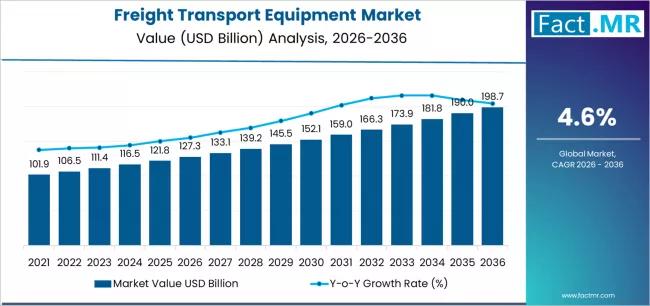
2036 Global Freight Transport Market Intelligence Report: Technology Shifts, Dem …
The market for freight transport equipment is expected to grow by USD 71.4 billion from its 2026 valuation of USD 127.3 billion to USD 198.7 billion by 2036. With demand growing at a CAGR of 4.6% between 2026 and 2036, this translates to a total rise of 56.1%.
Over the next decade, the market is expected to experience steady growth, supported by infrastructure investments, logistics digitization, and rising cross-border trade volumes.…
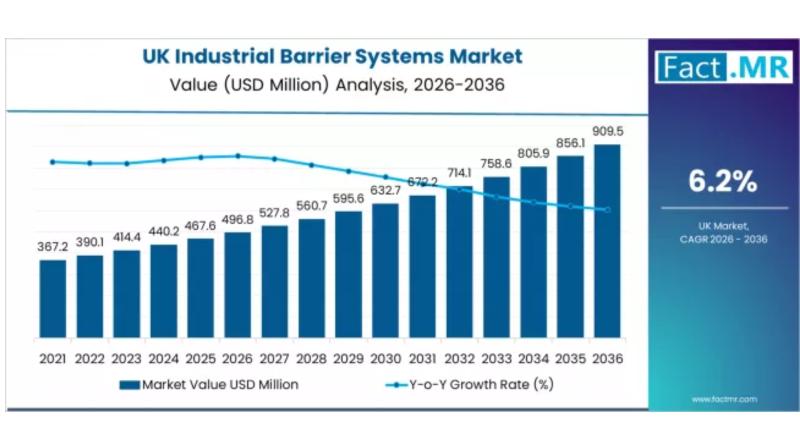
2036 Strategic Analysis of the UK Industrial Barrier Systems Market: Portfolio P …
The United Kingdom industrial barrier systems market is set for steady expansion, driven by rising investments in workplace safety, infrastructure modernization, and automated industrial environments. According to industry analysis, sales of industrial barrier systems in the UK are projected to grow from USD 496.8 million in 2026 to approximately USD 909.5 million by 2036, registering a compound annual growth rate (CAGR) of 6.2% between 2026 and 2036.
Industrial barrier systems-including safety…
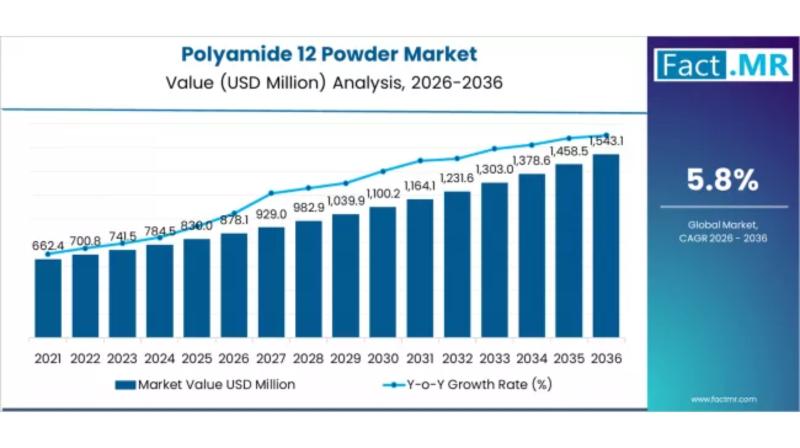
Polyamide 12 Powder Market Report 2026-2036: High-Value Insights for Strategy, P …
The global polyamide 12 (PA12) powder market is set for steady expansion, driven by rising adoption in additive manufacturing, automotive lightweighting, and high-performance industrial applications. According to Fact.MR, the valuation of the global polyamide 12 powder market is projected to grow from USD 878.1 million in 2026 to USD 1,543.5 million by 2036, registering a CAGR of 5.8% during the forecast period.
Polyamide 12 powder is widely recognized for its excellent…
More Releases for Fiber
Fiber Laser Market Forecast to 2028 COVID-19 Impact and Global Analysis By Type …
The fiber laser market was valued at US$ 2286.16 million in 2021 and is projected to reach US$ 4,765.43 million by 2028; it is expected to grow at a CAGR of 11.1% from 2021 to 2028.
Automotive production is constantly rising across the world, particularly in Asian and European countries, which is driving the demand for fiber lasers. Most automotive manufacturers are rapidly turning to fiber lasers to resolve their manufacturing…
Pea Fiber Market Inclinations Exhibit Growing Demand during the Period until 202 …
The new report on the pea fiber market provides estimations of the size of the global market and share and size of key regional markets during the historical period of 2014 – 2018. This highly favorable growth of the pea protein creates a highly conducive environment for the associated pea fiber market, which is expected to exhibit a promising CAGR of ~8% during the forecast period (2019-2029. The business intelligence…
Optical Fiber and Optical Fiber Cables Market
Optical Fibers and Optical Fiber Cables Market describes its growth, size, share, Forecast and trends to 2025
Optical Fibers and Optical Fiber Cables Market Production and Demand Analysis 2019 to 2025
Optical Fibers and Optical Fiber Cables Market 2019 Manufacturing Analysis and Development Forecast to 2025
Optical Fibers and Optical Fiber Cables Market 2019: Recent Study Including Growth Factors, Regional Drivers, Forecast 2025
Optical Fibers and Optical Fiber Cables Market Insights 2019, Global and…
Aramid Fiber Market (Para-Aramid Fiber, Meta-Aramid Fiber) by Type, Application …
The aramid fiber market (http://www.rnrmarketresearch.com/aramid-fiber-market-by-type-para-aramid-fiber-meta-aramid-fiber-and-application-security-protection-frictional-material-tire-rubber-reinforcement-optical-fiber-electrical-insulation-aeros-market-report.html) is projected to grow from USD 3.28 billion in 2018 to USD 5.78 billion by 2024, at a CAGR of 9.9%. The increasing demand for lightweight materials for automotive components owing to stringent environmental and emission regulations is expected to drive the market in the automotive industry. In addition, the demand for lightweight and flexible materials for body armor, firefighting equipment, bulletproof vests, helmets, and…
Fiber-optic couplers Market Segmentation By Type Y Fiber-optic Couplers, T Fiber …
Fiber-optic couplers market: Market Overview
Due to increasing reliance of organizations on IT, the demand for robust, agile and cost effective IT infrastructure is growing rapidly and supporting the Fiber-optic couplers market. The fabric-optic couplers market is expanding rapidly as the telecom services providers in this modern era are moving towards fiber based networking services. Increasing advancements in the telecom industry are one of the major factors driving the growth of…
Fiber Laser Market 2025 - Global Analysis and Forecasts by Type (Infrared Fiber …
The "Global Fiber Laser Market Analysis to 2025" is a specialized and in-depth study of the fiber laser industry with a focus on the global market trend. The report aims to provide an overview of global fiber laser market with detailed market segmentation by type, application and geography. The global fiber laser market is expected to witness high growth during the forecast period. The report provides key statistics on the…

