


Press release
Demand for Automotive Engine Valve in Japan Forecast 2026-2036: Market Size, Share, Competitive Landscape & Future Growth Outlook
Demand for Automotive Engine Valve in Japan
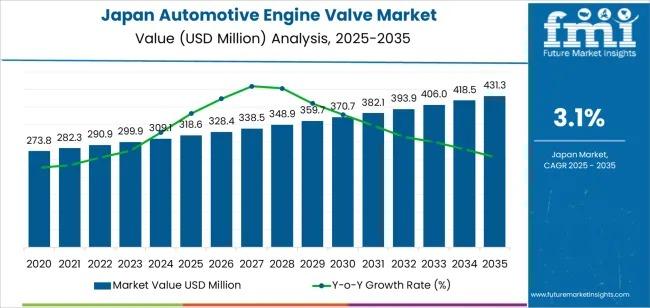
Automotive engine valves remain fundamental to internal combustion engine (ICE) and hybrid powertrain performance, controlling the intake of air-fuel mixtures and the expulsion of exhaust gases. In Japan, where hybrid vehicles, hydrogen-combustion concepts, and highly optimized ICE platforms continue to coexist with battery-electric vehicles, demand for high-precision engine valves is expected to remain resilient. These components directly influence fuel efficiency, emissions compliance, engine durability, and power output-critical parameters for automakers navigating increasingly stringent regulatory and performance expectations.
Get access to comprehensive data tables and detailed market insights - request your sample report today!
https://www.futuremarketinsights.com/reports/sample/rep-gb-28950
Between 2025 and 2030, demand for automotive engine valves in Japan is expected to rise steadily, supported by year-on-year increases as automakers refine combustion efficiency and adopt more advanced engine architectures. During this period, valve demand will benefit from incremental innovations such as improved heat resistance, enhanced durability, and tighter manufacturing tolerances. From 2030 to 2035, growth is forecast to strengthen further as advanced hybrid systems, alternative-fuel engines, and next-generation combustion platforms gain broader adoption, each requiring specialized valve designs capable of operating under higher thermal and mechanical stress.
Japan's regulatory landscape continues to be a decisive growth catalyst. Stricter emission norms and fuel-efficiency standards are compelling vehicle manufacturers to integrate sophisticated engine technologies, including variable valve timing, cylinder deactivation, and high-compression combustion systems. These advancements increase the technical complexity and value contribution of engine valves, elevating demand for precision-engineered products made from high-performance materials. Lightweight alloys, hollow valve designs, and advanced coatings are increasingly deployed to reduce friction, improve heat dissipation, and extend service life.
Mono metallic valves currently represent the leading product category, accounting for approximately 35% of total demand. Their popularity is driven by a balance of cost-effectiveness, mechanical strength, and reliable performance across a broad range of passenger-vehicle applications. Manufactured from a single metal type, mono metallic valves deliver consistent durability under fluctuating temperatures and pressures, making them a preferred choice for standard and mid-performance engines. As Japanese automakers continue optimizing conventional and hybrid engines, these valves are expected to remain a core component within engine assemblies.
By sales channel, OEM supply dominates with a 52% share, reflecting the critical role of engine valves in new vehicle production. Original equipment manufacturers prioritize valves that meet precise engineering specifications, ensuring compatibility with advanced engine designs and long-term reliability. As automakers accelerate the rollout of fuel-efficient and low-emission vehicles, demand for OEM-supplied, high-quality engine valves is expected to remain strong. At the same time, the aftermarket continues to provide a stable base of replacement demand, supported by Japan's large installed base of combustion-engine and hybrid vehicles.
Material innovation is another defining trend shaping the market. While steel remains widely used, growing adoption of titanium and nickel-based alloys reflects the industry's shift toward lighter, stronger, and more heat-resistant components. These materials enable valves to withstand higher combustion temperatures and pressures, particularly in turbocharged and hybrid engines. Advanced surface coatings and precision machining further enhance wear resistance and operational efficiency, reinforcing the strategic role of valves in modern powertrains.
Regionally, demand growth is broad-based across Japan, with Kyushu & Okinawa leading at a 3.8% CAGR. This region benefits from a strong concentration of automotive manufacturing facilities and a well-developed supply chain for powertrain components. Kanto, encompassing major automotive and industrial hubs such as Tokyo and Yokohama, follows with a 3.5% CAGR, driven by high production volumes and ongoing investments in automotive innovation. Kinki and Chubu, anchored by Osaka, Kyoto, and Nagoya respectively, continue to record steady growth, supported by established OEM and supplier networks. Even regions with more moderate expansion, such as Tohoku and the Rest of Japan, contribute meaningfully through their role in component manufacturing and supply-chain integration.
Despite favorable fundamentals, the market faces structural challenges. The gradual shift toward battery-electric vehicles, which do not require conventional engine valves, introduces long-term demand uncertainty. In addition, rising costs of specialty materials and the complexity of advanced manufacturing processes place pressure on margins and investment cycles. However, Japan's strong emphasis on hybrid vehicles and alternative combustion technologies is expected to offset these constraints over the medium term, sustaining demand for advanced valve systems.
Personalize Your Experience: Ask for Customization to Meet Your Requirements
https://www.futuremarketinsights.com/customization-available/rep-gb-28950
The competitive landscape is shaped by global and domestic leaders including BorgWarner, Delphi Technologies, Eaton Corporation, Mahle GmbH, and Fuji Oozx Inc. These companies compete through advanced metallurgy, close OEM collaboration, and continuous innovation in valve design and manufacturing. BorgWarner's leading position reflects its strength in combustion-system components and global scale, while other players focus on specialized applications and high-performance materials.
As Japan's automotive industry balances electrification with advanced combustion and hybrid technologies, automotive engine valves will remain a critical enabler of efficiency, compliance, and performance. The market's steady growth trajectory through 2035 highlights the enduring relevance of precision engine components-and signals substantial opportunity for stakeholders seeking deeper insights into technology trends, regional dynamics, and competitive strategies shaping this evolving sector.
Similar Industry Reports
Automotive Engine Valve Market
https://www.futuremarketinsights.com/reports/automotive-engine-valves-market
Demand for Automotive Engine Valve in USA
https://www.futuremarketinsights.com/reports/united-states-automotive-engine-valve-market
Automotive Performance Tuning and Engine Remapping Industry Analysis in Japan
https://www.futuremarketinsights.com/reports/automotive-performance-tuning-and-engine-remapping-service-industry-analysis-in-japan
Future Market Insights Inc.
Christiana Corporate, 200 Continental Drive,
Suite 401, Newark, Delaware - 19713, USA
T: +1-845-579-5705
For Sales Enquiries: sales@futuremarketinsights.com
Website: https://www.futuremarketinsights.com
Future Market Insights, Inc. (FMI) is an ESOMAR-certified, ISO 9001:2015 market research and consulting organization, trusted by Fortune 500 clients and global enterprises. With operations in the U.S., UK, India, and Dubai, FMI provides data-backed insights and strategic intelligence across 30+ industries and 1200 markets worldwide.
This release was published on openPR.
Permanent link to this press release:
Copy
Please set a link in the press area of your homepage to this press release on openPR. openPR disclaims liability for any content contained in this release.
You can edit or delete your press release Demand for Automotive Engine Valve in Japan Forecast 2026-2036: Market Size, Share, Competitive Landscape & Future Growth Outlook here
News-ID: 4322001 • Views: …
More Releases from Future Market Insights
Egg-Free Dressing Market in USA Forecast 2026-2036: Market Size, Share, Competit …
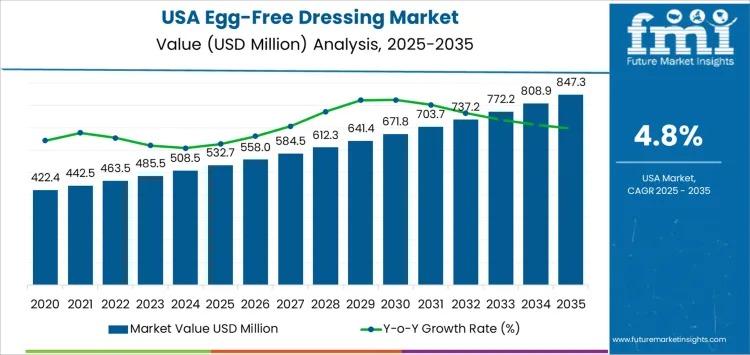
The demand for egg-free dressing in the USA is entering a sustained growth phase, supported by changing dietary preferences, rising allergy awareness, and innovation in plant-based food formulation. Valued at USD 532.7 million in 2025, the market is projected to reach USD 847.3 million by 2035, expanding at a 4.8% CAGR over the forecast period. Egg-free dressings are no longer niche substitutes; they are becoming mainstream pantry staples across households…
Demand for Camshaft Lifters in Japan Outlook 2026-2036: Strategic Trends, Innova …
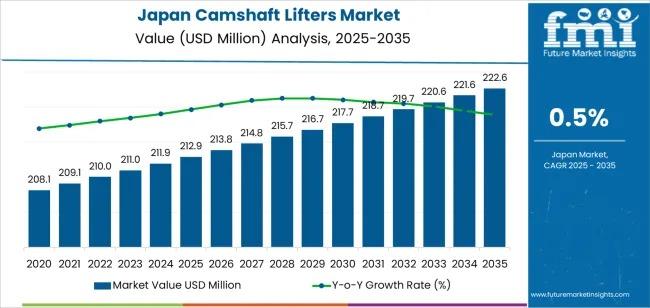
The demand for camshaft lifters in Japan is expected to remain stable over the next decade, reflecting the mature nature of the country's internal combustion engine (ICE) component ecosystem and the gradual transition toward electrified powertrains. Valued at USD 212.9 million in 2025, the Japan camshaft lifters market is projected to reach USD 222.6 million by 2035, advancing at a modest compound annual growth rate (CAGR) of 0.5%. While growth…
Demand for Blind Spot Detection in Japan Forecast 2026-2036: Market Size, Share, …
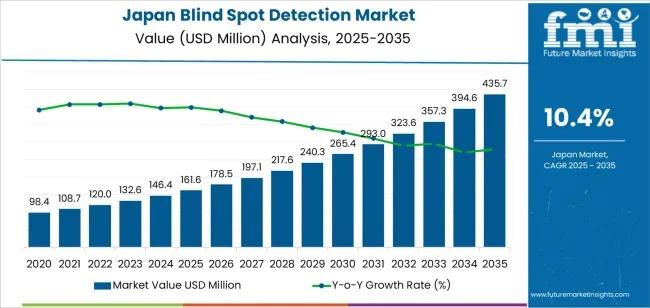
The demand for blind spot detection (BSD) systems in Japan is entering a decisive growth phase, underpinned by rapid advancements in vehicle safety technologies, rising regulatory support for advanced driver assistance systems (ADAS), and the automotive industry's transition toward electrified and automated mobility. Valued at USD 161.6 million in 2025, the market is projected to reach USD 435.7 million by 2035, expanding at a robust compound annual growth rate (CAGR)…
Japan Ascorbic Acid Market Outlook 2026-2036: Strategic Trends, Innovation Drive …
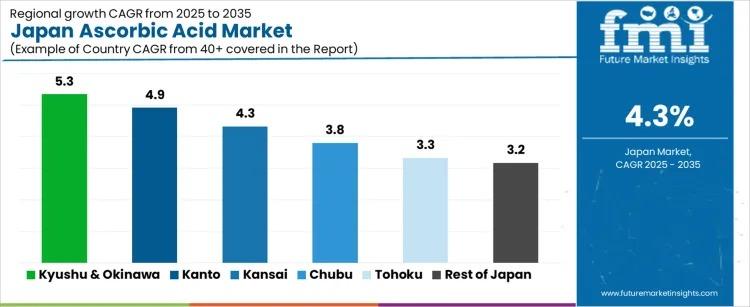
Demand for ascorbic acid in Japan is projected to grow from USD 83.1 million in 2025 to USD 126.3 million by 2035, registering a compound annual growth rate (CAGR) of 4.3% over the forecast period. Commonly known as vitamin C, ascorbic acid remains a foundational ingredient across Japan's pharmaceutical, food and beverage, supplement, and cosmetic industries, valued for its antioxidant activity, immune support, and critical role in collagen synthesis.
Japan's market…
More Releases for Japan
Vision Guided Robotic Systems Market Size 2022 - FANUC(Japan), KUKA(Germany), AB …
The Vision Guided Robotic Systems Market research report also provides an in-depth analysis of key players in the market, including their company profiles, business offerings, recent development, market strategies, and critical observation related to the product. The research study provides extensive coverage of the Vision Guided Robotic Systems Market size across all industries and businesses. In addition, it offers detailed insights into market size and growth depending upon various segments…
Japan Agriculture Market, Japan Agriculture Industry, Japan Agriculture Livestoc …
The agriculture sector is a very significant sector in Japan. Agriculture sector exists in every part of country, but is especially essential on the northern island of Hokkaido that accounts for approximately 10% of national production. Modern methods such as commercial fertilizers, hybrid seeds, insecticides, and machinery, have been used so efficiently in farming. Japan is the second major agricultural product importer in the world (after the U.S.). Almost all…
Car Navigation ECU Market 2019: Top Key Players are AW Software (Japan), Contine …
Car Navigation ECU Market 2019 Report analyses the industry status, size, share, trends, growth opportunity, competition landscape and forecast to 2025. This report also provides data on patterns, improvements, target business sectors, limits and advancements. Furthermore, this research report categorizes the market by companies, region, type and end-use industry.
Get Sample Copy of this Report@ https://www.researchreportsworld.com/enquiry/request-sample/13844912
Global Car Navigation ECU market 2019 research provides a basic overview of the industry…
Global Car Navigation ECU Market Outlook to 2023 – AW Software (Japan), Contin …
An automotive navigation system is part of the automobile controls or a third party add-on used to find direction in an automobile and the ECU is the core part control it.
Car Navigation typically uses a satellite navigation device to get its position data which is then correlated to a position on a road. According to this study, over the next five years the Car Navigation ECU market will register a…
Global Car Navigation Parts Market Research Report 2019-2025 | Global Key Play …
This research report titled “Global Car Navigation Parts Market” Insights, Forecast to 2025 has been added to the wide online database managed by Market Research Hub (MRH). The study discusses the prime market growth factors along with future projections expected to impact the Car Navigation Parts Market during the period between 2018 and 2025. The concerned sector is analyzed based on different market factors including drivers, restraints and opportunities in…
Global Automotive 3D Scanning Laser Radar (3D-LiDAR) Market 2019-2025 | Velodyne …
Researchmoz added Most up-to-date research on "Global Automotive 3D Scanning Laser Radar (3D-LiDAR) Market Insights,Forecast to 2025" to its huge collection of research reports.
3D LiDAR uses a pulsed laser to detect distance, velocity and angle with high precision. LiDAR can classify objects, detect lane markings, and may also be used to accurately position an autonomous vehicle relative to a high definition map.
3D LiDAR is prominent, as it is a key…

